JULIMAR is three Iowa City-based interdisciplinary artists exploring perspectives on the mysteries of seed dormancy and germination through movement, visual art and writing. Our practice emerges from deep listening to our environments and across generations so that we may embody older forms of knowledge and shift our relationship to land. The main questions driving our collaboration include: How do processes in nature emerge in human patterns of behavior and how can we explore our connection to soil and plantlife through movement? How do our bodies in motion hold answers to questions about the universe (and how can we hear them)? We see the universe at the level of the seed, and witness all the mysteries it holds that we have yet to learn. Rehearsal Video
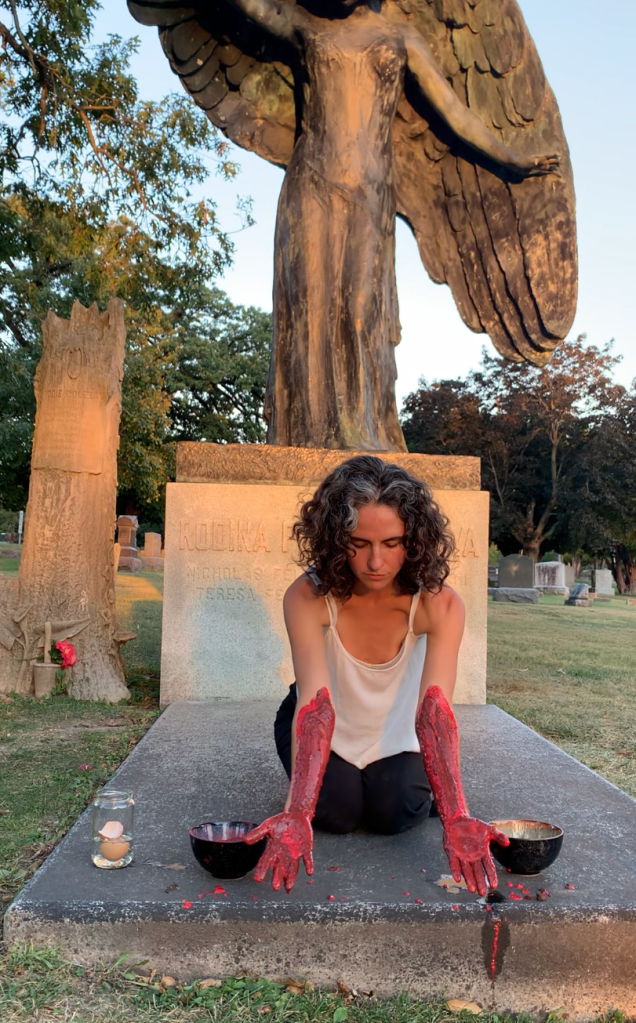
Iowa, dónde está Ana Mendieta?
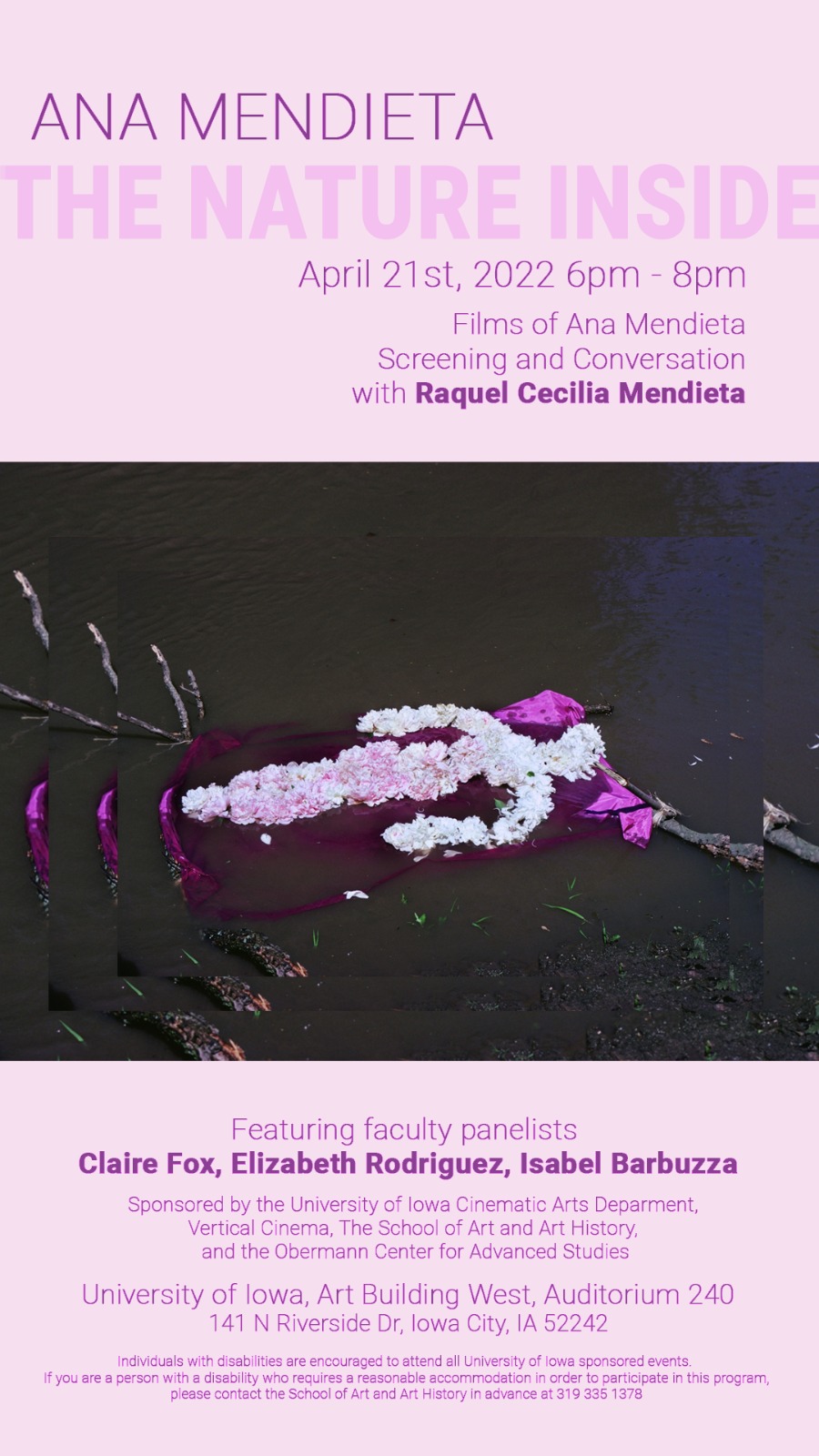
My article, “Iowa, dónde está Ana Mendieta?” appeared in the Winter 2021 edition of Voices from the Prairie, a publication for Humanities Iowa. I examine the extensive work Mendieta did while studying and working in Iowa City and challenge the lack of visibility for her legacy on campus and in the community.

Glass Pane Series
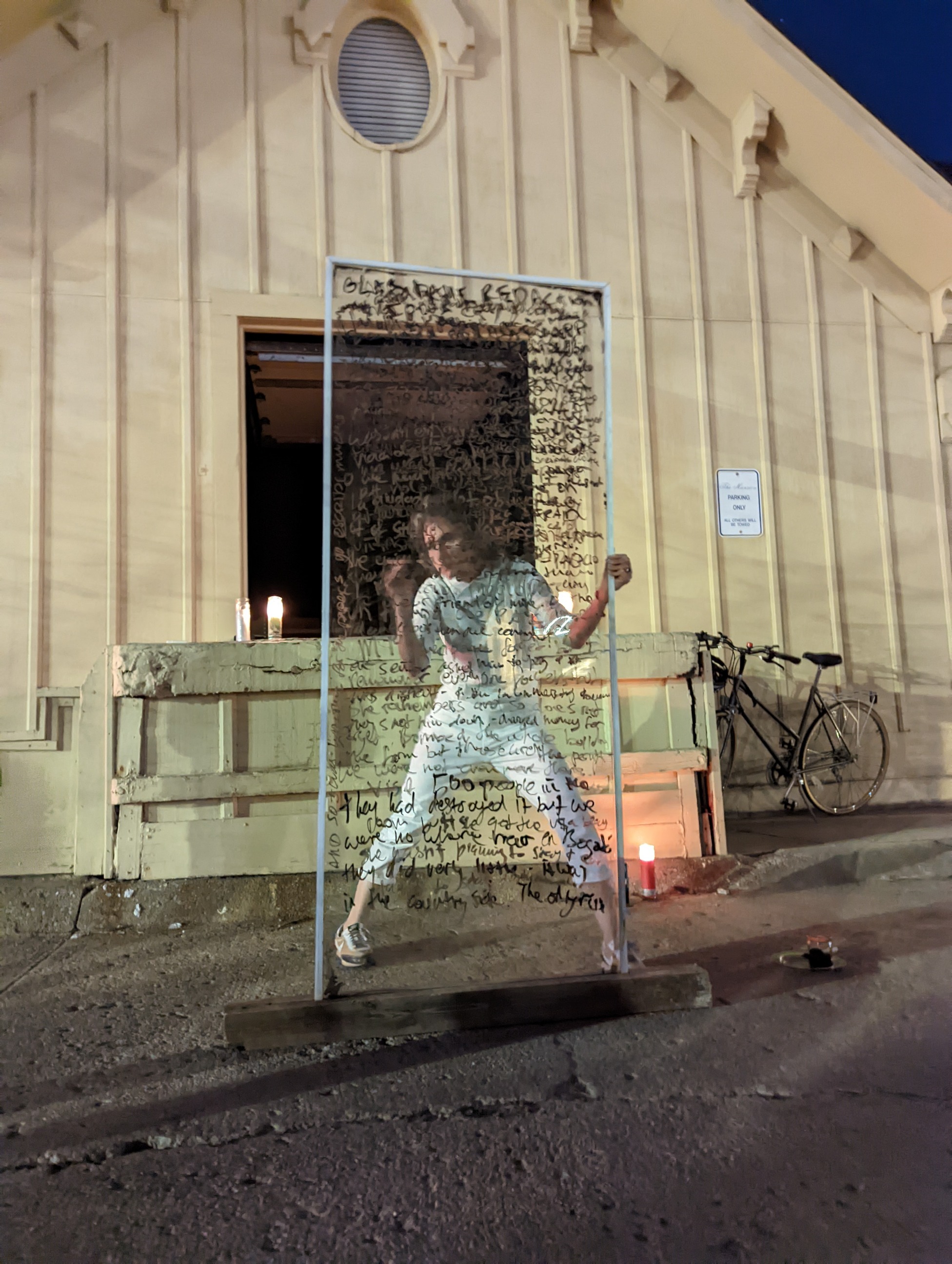
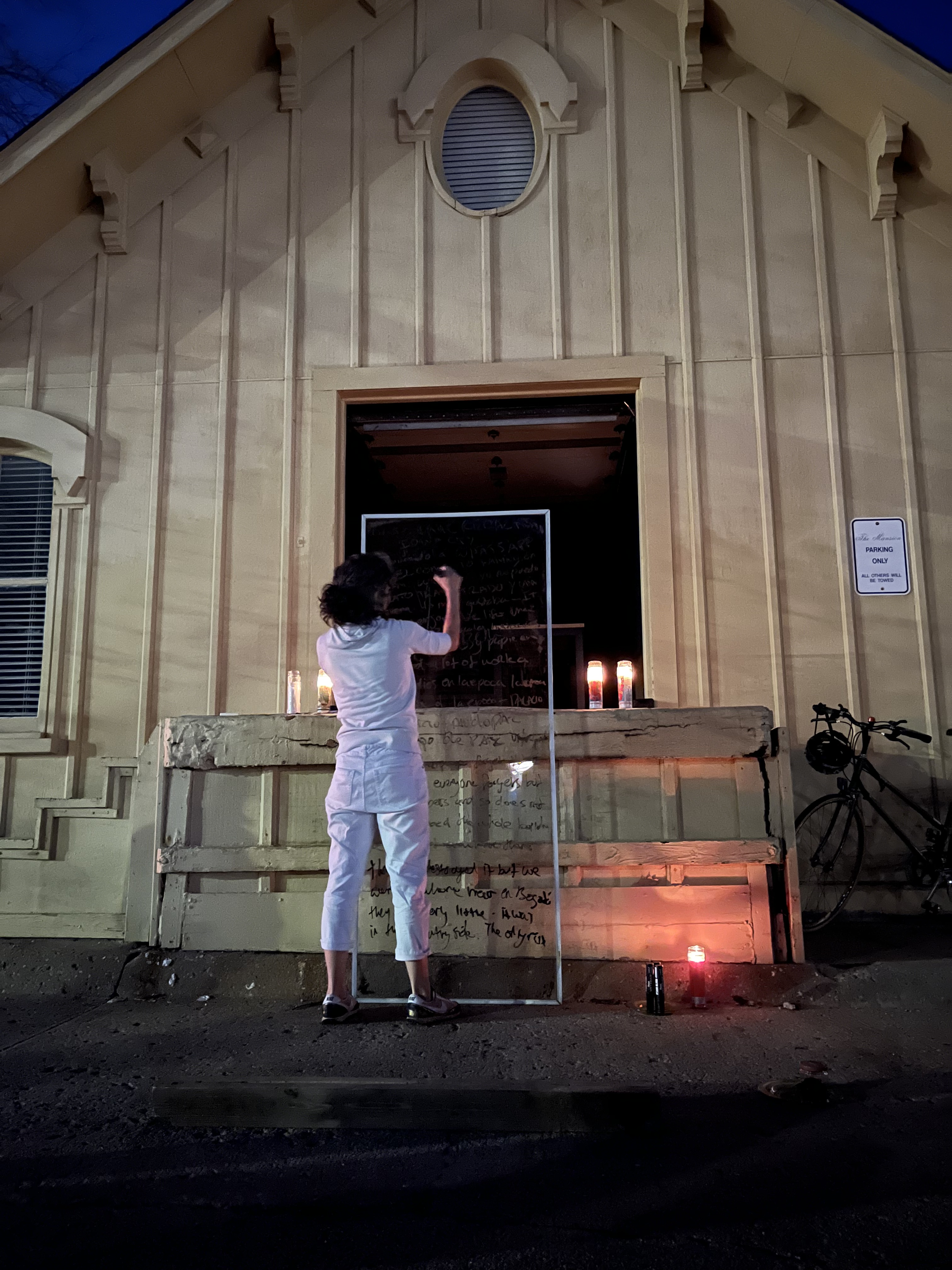
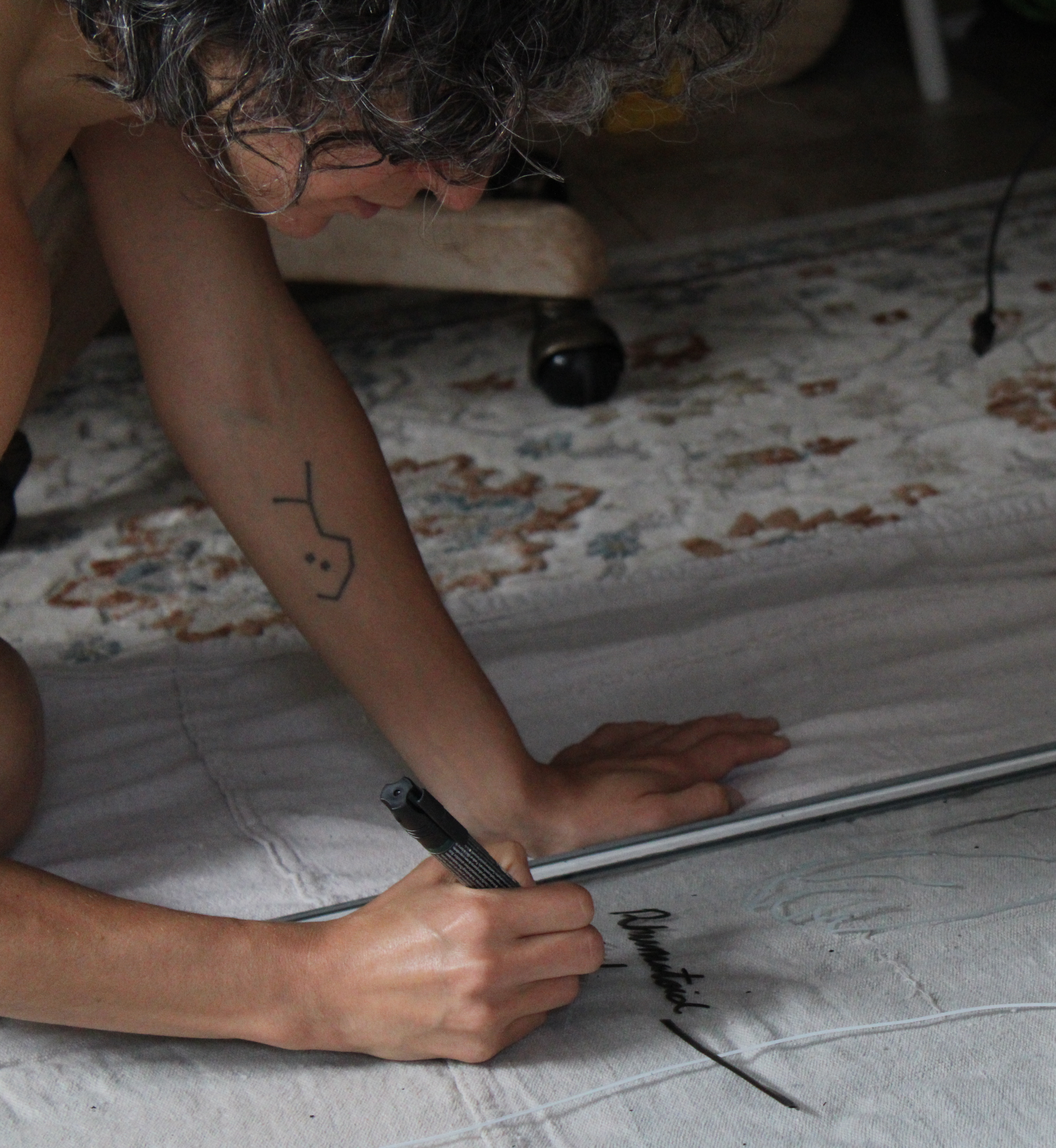
Artist Statement: “Glass Pane Redaction” emerges from the urgent need to visualize how familial migration narratives have the power to overwrite of sense of self. In “Glass Pane Redaction” I listen to an illegible narration while I write on a pane of glass, approximately the size of myself, with a paint marker until it completely obscures me. The viewer hears two narratives playing simultaneously from a speaker: an oral history I’ve conducted in both English and Spanish of my mother’s migration story from Colombia to New York City in 1980. I communicate the sensation of being overwhelmed by multiple competing narratives, which never exists in singularity but always through the multiplicity of languages and borders. In my writing on migration, diaspora, and trauma, I argue that the stories we hear offer more obscurity than revelation and challenge the notion of veracity, when truth is always altered by state-sanctioned practices of redaction and violent erasure.
Turning towards the self and my personal history of my family’s migration from Colombia to the United States, I explore the limits of listening and ask, what happens to us when we inherit obscurity as our cultural narrative? The piece is simple and overwhelming. The writing on glass mirrors the tedious experience of listening to the same stories about her life in Bogotá, her experience traveling to the United States, and her life in New York City in the 1980s. It was peaceful, it was dangerous, it was ordinary, it was nice. Even though she complains about her inability to recall names and dates (she struggles to remember what state I live in), she defends her memory as infallible. My mother commits herself to a curated series of proxy stories that stand in for a resounding absence. The tool of censorship—the black marker—becomes my medium in which to write an illegible story, which redacts my body over the course of the performance. I interrogate the practices of auto-writing and recording one’s personal or family history, which are often associated with counter-erasure and healing. For those of us raised in immigrant communities, these practices are not always therapeutic, nor do they lead to further knowledge of one’s self. When writing becomes overwriting, the practice becomes a confrontation with obscurity.
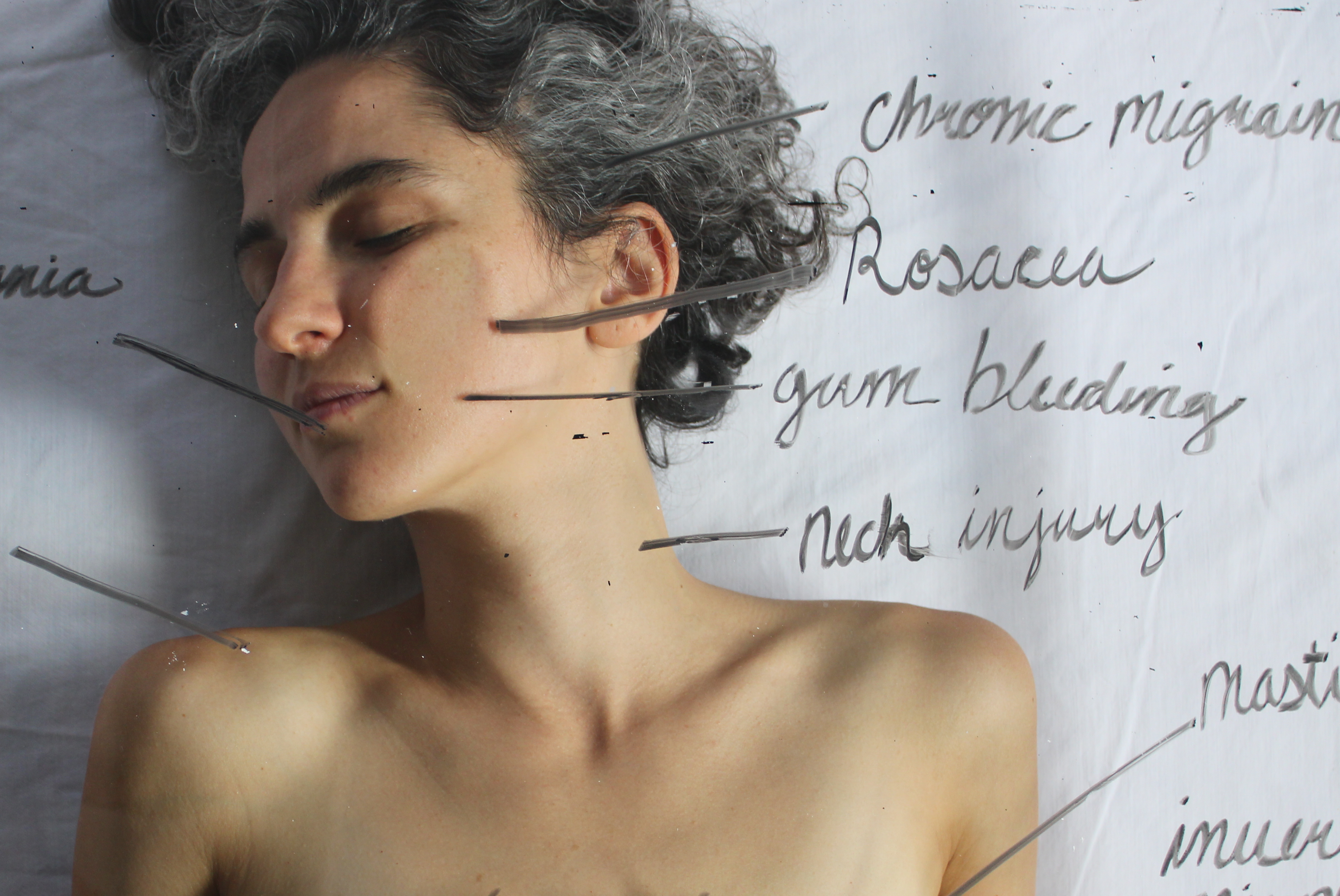
Pane Anatomy
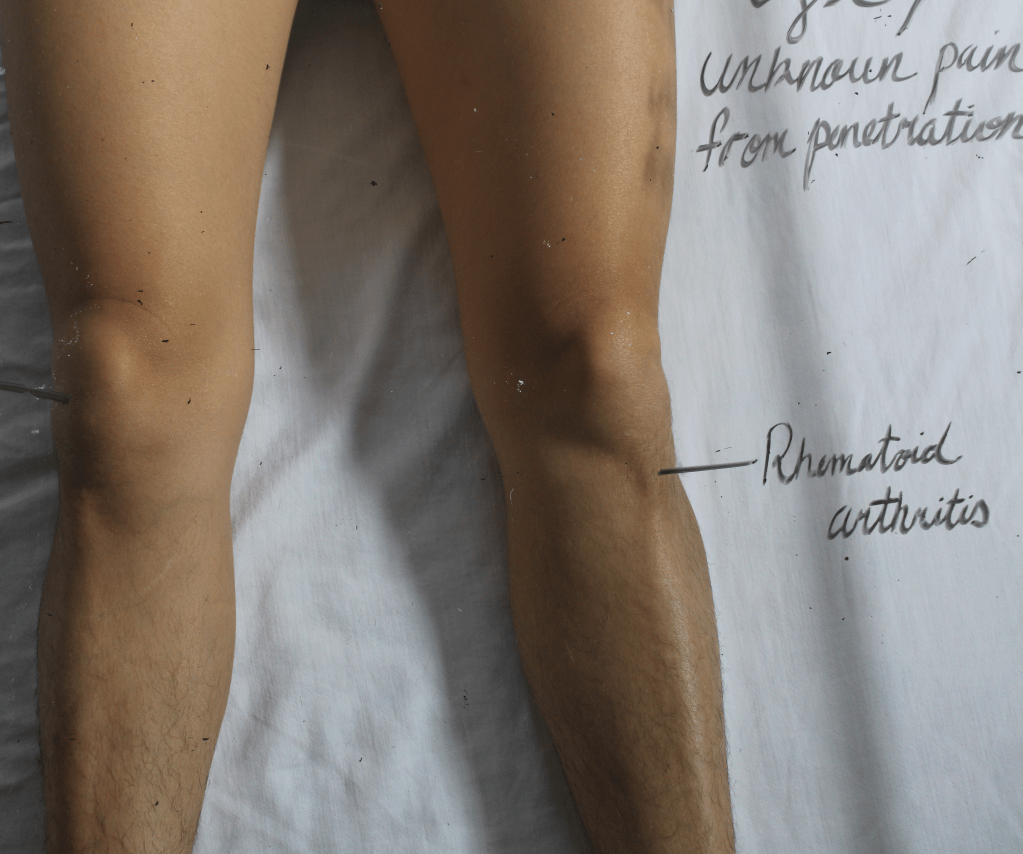
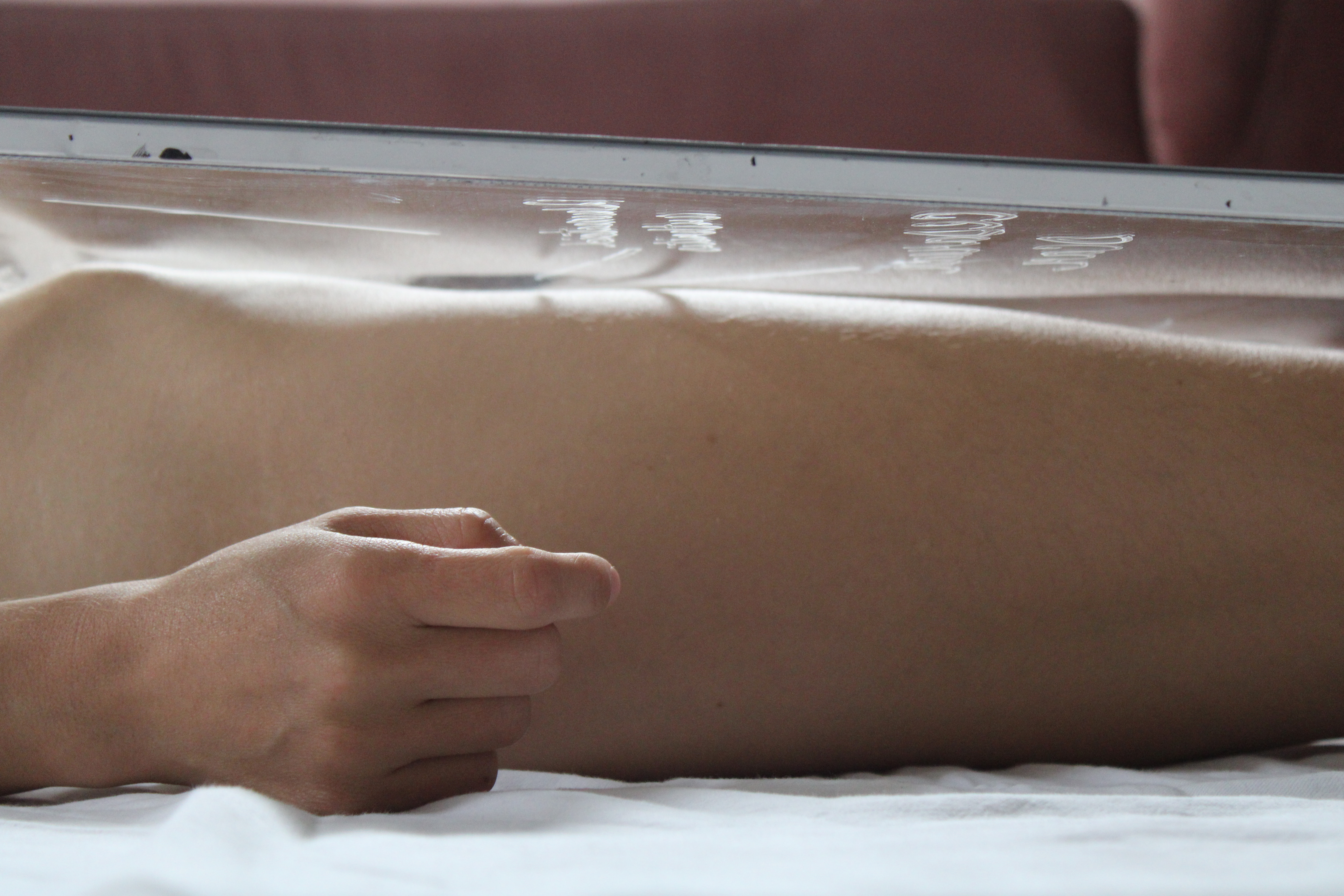
I annotate my history of felt pain in an effort to surrender to the narrative my body has created for me over time. I take inspiration from Encyclopedia Britannica’s human anatomy section, which was my first exposure to the interior of the human body, and seek to return to an earlier state of wonder as a pathway towards healing. Chronic pain and inflammation-based illness has defined my life, and this piece pulls me forward in a longer effort to change my relationality to pain. As a person socialized as a woman, I am taxed to become a researcher of my own body. In this piece, I reduce myself to specimen but study my body with care.
 Elizabeth Rodriguez Fielder